Category Archives: United States

Exodus

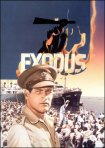
exodusExodus (1960) is adapted from the blockbuster novel by Leon Uris. It is set in Cyprus and Palestine during the British Mandate period of 1947-48.  First it follows  the misadventures of a boatload of Jewish refugees from Europe whom the British imprison in Cyprus rather than allow them entry to Palestine, then it follows characters on that boat and their friends and lovers through the events leading up to Independence in 1948.

The movie was produced and directed by Otto Preminger, and it starred Paul Newman, Eva Marie Saint, Ralph Richardson, Peter Lawford, Lee J. Cobb, and Sal Mineo.   One notable aspect of the movie is that it was filmed entirely on location in Cyprus and in Israel.  Paul Newman makes an odd-looking Israeli, but every scrap of the scenery is authentic.  Given that the real star of Exodus is the land itself, Eretz Israel, that is especially appropriate.

Other notable facts:  Otto Preminger hired Dalton Trumbo to adapt the screenplay from the novel, despite the fact that he was one of the people on the Hollywood blacklist.  This marked one of the first times a major director “broke” the blacklist.

Exodus won the Oscar for Best Music, and Sal Mineo received an Oscar nomination for Best Supporting Actor.

Commentary

Exodus is another film that runs deep in the Jewish-American psyche; I have listed it as a must-see.  It is an excellent way to experience the narrative of the foundation of the State of Israel as many American and Israeli Zionists understand it.

It reflects a time when many Israelis were thoroughgoing socialists, when the “black hat” orthodox of Eastern Europe were believed to be dying out, when tourism in the area was unthinkable, when no one at all was talking about “Greater Israel.”    Europe was interested in getting rid of the few Jews who had survived the Holocaust, and because no one else wanted them either, they were living in DP (displaced persons) camps.  There were three groups of Jews in Palestine at this point, the “Old Yishuv” Jews who had been in the land all along (and who do not figure into this film at all),  the Sabras (Jews born in Israel, whose parents or grandparents had settled there from Europe) and the new immigrants, mostly survivors of the Holocaust, who managed to get into the country despite the British blockade.

The film was a huge undertaking, one of the most elaborate of its time, and it is impressive but flawed.   Uris’s novel is simply too massive for a film adaptation; both plot and characters are truncated to make them fit.  As history, it has obvious flaws (starting with the fact that nearly all the characters are fictional, and the fictional characters crowd out the historical ones.)  Why, then, is it a must-see?  It is because if you want to understand why so many Jews feel passionate about the need for Israel, this film is a good place to begin.  It is also a must-see because it is a way to see the Land itself.

Many of the events in the film really happened:  there was a ship Exodus.  The King David Hotel was indeed bombed by the Irgun.  There was a prison break from the fortress of Acre.  And of course, there was a War of Independence immediately after partition in 1948.

Just don’t be in a hurry:  Exodus is one LONG film, 212 minutes.  Make yourself and a friend some popcorn, and settle in for a long evening, because after it is done, you’ll want to talk.

Double Feature

Watch Exodus before or after watching Gentleman’s Agreement.  They are set in exactly the same time period, one in Europe and the Middle East, the other in the United States.    Keep in mind as you watch that the attitudes in Gentleman’s Agreement were the attitudes of the U.S. State Department as it participated in the U.N. discussions so critical to events in Exodus.

The Chosen

chosenThe Chosen (1981) is an excellent film adaptation of the Chaim Potok novel of the same name.  It is an account of two Jewish boys growing up in New York during WWII up to the founding of the State of Israel.  It stars Maximilian SchnellRod Steiger, Robby Benson, and Barry Miller.  It won awards at both the Montreal and Paris Film Festivals.

Commentary

The Chosen is a quiet little film that explores some key tensions in Jewish life in America.  It addresses the tension between the expressions of Judaism that seek absolute fidelity to the past and the expressions of Judaism that seek to remain Jewish while engaging with modernity.  It explores the tension between generations of a family, and the meanings that tension has for each generation.  The film is deeply rooted in time and place:  it was shot in Brooklyn, and it explores a particular moment in Jewish history.

I have seen comments to the effect that The Chosen is not a completely accurate picture of Haredi (ultra-Orthodox) orthodoxy.  I find that it is a less sensational picture than many other more recent films have depicted.  The viewer might want to keep in mind that the film was made almost 30 years ago, and that both the communities shown in the film and the broader Jewish world have changed since then.   So don’t watch it and think it’s all there is to know about Haredi life.  On the other hand, the tensions portrayed are accurate and as vital today as they were then.

Unfortunately, at this writing, The Chosen is out of print in DVD, but it is available for rental from many sources.  A must-see!

The Jazz Singer

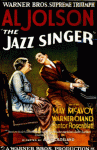
TheJazzSingerThe Jazz Singer (1927)tells the story of Jakie Rabinowitz, a cantor’s son who has inherited his father’s gift for song  but who feels driven to express that gift in the music hall rather than in the synagogue.  It recounts his rift with his father, his rise to secular fame as “Jack Robin,” and his struggle to be true to himself as well as to his family and tradition.

The movie is INfamous for Al Jolson’s use of blackface.  Jolson was a Russian-born Jew who performed in blackface long before this role.  The short story (“The Day of Atonement”) and play upon which the film is based were written by Samson Raphaelson, who saw Jolson perform in blackface in 1917 and felt that he had seen such emotional intensity in performance only in the singing of cantors in synagogue.  The story, the play and the movie are based loosely on Jolson’s own life. The blackface sequences are reprehensible, but too much a part of the film to be excised.

By the way, this film should not be confused with the 1953 remake with Danny Thomas, or the 1980 remake with Neil Diamond, also titled The Jazz Singer.   The 1953 remake is bland, but the 1980 film is just plain awful.

Commentary

The film marked a watershed in American film history:  it was the first feature length commercial film with synchronized dialogue:  the first of the “talkies.”  It deals with themes that are central to the Jewish experience in America:  the tension between the “religious Jew” and the “secular Jew” (often, as in this case, in a single Jew), tensions around the observance of family tradition, and issues of assimilation.  It acknowledges the debt that first-generation American Jews owed to their immigrant parents, and the tension between those two generations.

In many ways the film is like a drawing by M.C. Escher:  the symmetries overwhelm.  The Warner Brothers, born Wonskolaser in Poland, were Jews who immigrated to North America and became involved in film distribution and later production.  (Today Warner Bros. is a subsidiary of Time Warner, with headquarters in Burbank, CA.)  They are a sterling example of Jewish success in America,  where some new fields (like entertainment and the movies) offered an open door to Jews, shut out of more well established professions.  Their company pioneered the talkies by making this film, and by partnering with Western Electric to produce the technology that made it work.  The Jazz Singer is not only Al Jolson’s story, but the story of the Warner brothers themselves and their children:  the immigrant and first American-born generation.  The film also features a recital by Cantor Joseff Rosenblatt, an American-born cantor who some years later would dabble in acting.

Despite its problems, this 1927 film is a “must see” on several grounds: as a close-up of the Askenazi immigrant experience, as a piece of history in its own right, and as a melding of two musical traditions, chazzanut [cantorial singing] and jazz, which have both been central to the American Jewish experience. For a group audience, especially an audience with young viewers, it is important to consider how to contextualize the blackface segments.

Driving Miss Daisy

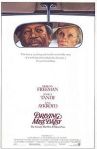
200px-Driving_Miss_Daisy_Driving Miss Daisy (1989) is an Oscar winning movie based on the Pulitzer Prize winning play by by Alfred Uhry.  It recounts a 25-year relationship between an elderly Jewish woman (Daisy, played by Jessica Tandy) and an elderly African-American man (Houk, played by Morgan Freeman) in Atlanta, GA.  Their story begins uneasily, as Miss Daisy’s son (played by Dan Aykroyd) decides she can no longer drive her own car, and hires Houk to drive her.   Gradually they negotiate a working relationship which over time becomes a friendship.  The film spans the years from 1948 until 1973, years of tremendous social change in America.

Wikipedia notes that this was the last PG-rated film to receive the Best Picture Oscar (at this writing, in 2009).

Commentary

Some readers may be surprised that I list this film as a “must see” when I didn’t give that designation to Schindler’s List.  I list it because this is a movie that nearly anyone can watch without having nightmares about it, and at the same time it portrays anti-Semitism and racial prejudice in both their overt and their more subtle forms.

At one key point in the film, a Alabama state trooper comments to his partner out of earshot of Daisy and Houk that she is an “old Jew woman” being driven by an “old n—r man.”  The menace in that scene, and in a later scene of the Temple bombing in Atlanta make it clear that Daisy and Houk have more in common than may have been apparent at the outset.  Complicating the matter, though, is the fact that Daisy is very much a product of her time:  her own racist and classist inclinations are a barrier between the two almost to the end of the film.  The greatness of this film lies in its focus on the humanity of Houk and Daisy as they navigate their times and make discoveries about one another, without a need to sugarcoat Daisy.

This film also serves as a reminder that while some American Jews did indeed support the civil rights movement at great risk to themselves and their communities, that history of risk does not obviate the need, then and now, for each individual to examine his or her own attitudes and behavior, and to make teshuvah (a profound change) if need be.

Perhaps the most wonderful thing about Driving Miss Daisy is that it deals with all these very serious issues with a light hand and a great deal of humor.    A must see!

Schindler’s List

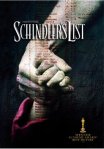
schindlers-list-DVDcoverSchindler’s List (1993) is the most successful and famous of Holocaust films.  It is based on the true story of Oskar Schindler, an Austrian Catholic businessman who preserved the lives of over 1,000 Jews by putting them to work in his factory and then using his influence and his fortune to keep them from the death camps.

Steven Zaillian’s screenplay is based on the book by Thomas Kenneally, and the film was directed by Steven Spielberg.  It is meticulously researched and produced, and the end product is a searing film that merits its “R” rating.  Liam Neeson stars as Schindler, Ben Kinglsey as Yitzhak Stern, his bookkeeper, and Ralph Fiennes portrays Amon Goeth, one of the most reprehensible and terrifying figures in film.  This is not a film for children, but it is a truly great film.  It won 7 Oscars out of 12 nominations in 1994.

Commentary

This film has been the beginning of a Holocaust education for many people around the world, simply because of its availability and popularity.  It is an excellent source, but I would approach it with some caution:  it is NOT suitable for children, or for someone who gets nightmares from upsetting films, and while it is a good beginning of a Holocaust education, it should not be the end of anyone’s education.

I have been told by more than one survivor that Spielberg put on film what audiences would stand:  the real historical events were more horrible than anything that should be available on film.  Moreover, while narrative tells us a great deal, we also need to talk about the circumstances that came together to create the events we call “the Holocaust.”  Good as it is, the film does not say enough about the events it covers to be the final word on the subject.

All of that said, I would have tagged this film a “Must see!” were it not for the difficult content.  See it if you can, and discuss it with others.

Double Feature

For a non-fiction treatment of the topic, and especially of the details of the death camps, the 9.5 hours of Shoah are incomparable but horrific.   (I am not suggesting that one watch these two films as an actual double feature, in one sitting — I fear  that it might lead to suicidal depression and despair!  “Double Feature” is just a way of signifying in this blog that two films are related.)

The Frisco Kid

200px-Frisco_kid_ver2

The Frisco Kid (1979) tells the tale of Rabbi Avram Belinski,  played by Gene Wilder, who travels from Poland to San Francisco in 1850.  Along the way he is set upon by robbers, befriended by the Amish, set upon by wild animals, befriended by a bank robber, set upon by Indians, befriended by Indians, and so on.  The robber who befriends the rabbi is played by Harrison Ford (before his Indiana Jones days — in fact, Wilder claims in his autobiography that Ford was cast in the role partly because of his performance in this film.)   It is a classic buddy film:  a mismatched pair meet cute, make a journey, and are both changed by the experience.  It was directed by Robert Aldritch (Dirty Dozen and The Longest Yard.)

Commentary

This is a very funny, very thoughtful movie about the challenges of living a Jewish life in a non-Jewish environment.  Rabbi Belinski appears to be an innocent at first, but there is much more to him:  he is insistent on his devotion to Torah and Jewish values, and his approach to both fortune and misfortune is informed by that devotion.

Bob Bloom of the Lafayette Courier & Post dismissed the film as “sterotypically offensive” in its depiction of Jews and Indians, but both the script and Gene Wilder’s portrayal of the rabbi go beyond the stereotypes (which are played for laughs, true) into the values behind the stereotypes.  “What would you trade for Torah?” the Indian chief asks the rabbi.  (The depiction of the Indians in this movie is another matter, I confess.  The Indians in this picture are not characters, but mere devices.)

Much of the humor in the film is “inside” Jewish humor — if you “get” the jokes,  rest assured, you are beginning to get a feel for cultural Judaism.

Question

Try watching the film for moments when the rabbi does something that surprises or annoys the other characters:  what Jewish value is expressed in his choice?

Fiddler on the Roof

fiddlerFiddler on the Roof (1971) is the screen adaptation of the hit Broadway musical by the same name.  It is based on the story “Tevye the Milkman” by Sholom Aleichem, the most prolific Yiddish writer of his time.  The story is set in Anatevka,  a shtetl [village] in the Pale of Settlement of pre-revolutionary Russia, about 1910, with WWI on the horizon, although there are also details that seem to point to a time about 1883.   Topol stars as Tevye, the milkman who faces the problems of shtetl life:  finding husbands for his daughters, food for his family, and survival in the face of the crushing regime of the Czar.  One casting item of note:  the matchmaker is played by Molly Picon, one of the great actors of American Yiddish stage and cinema.

The film won three Oscars (Cinematography, Music, and Sound) out of eight nominations.

Commentary

Fiddler offers a somewhat fantasized version of the brutal life of the shtetl.  It is a touchstone for the American Jewish psyche and a prime example of laughing through tears, the hallmark of much Jewish humor.  It is also the most easily accessible introduction to the Yiddish world of Sholom Aleichem.

Most importantly, Tevye is a Jewish Everyman:  he suffers, but he endures.  His world  is crumbling:  even in the muddy shtetls of the Ukraine, modernity is changing things, changing attitudes, making history.  The old traditions are under pressure; the young people have new ideas.  Tevye is devoted to tradition, but he recognizes that some forces cannot be resisted.  In every age, the conflict between tradition and change has challenged Jews:  “what now?  How shall we maintain our traditions in this new place?” has been the cry in every age, beginning perhaps on the banks of the Nile, in Egypt.

Not to be missed!

Double Feature

There is another big American movie musical about the same period, Yentl.  It tells a story set in Eastern European shtetl and town life from a woman’s point of view.  If you choose to watch both, it’s fun to compare them.

Gentleman’s Agreement

gentlemans-agreement-DVDcoverGentleman’s Agreement (1947) was a groundbreaking film in its day, and it is still a powerful story about prejudice in America.  Moss Hart wrote the screenplay, based on Laura Z. Hobson‘s bestselling novel.  The movie stars Gregory Peck as a journalist assigned to write a series of magazine articles about anti-Semitism.   Searching for a “personal angle” on the story, he decides to pose as Jew, and soon discovers what it is to be on the receiving end of intolerance.

Darryl F. Zanuck produced it, and Elia Kazan directed.  In addition to Peck, the film stars Dorothy McGuire, John Garfield, Dean Stockwell, Celeste Holm, and June Havoc.  Gentleman’s Agreement won the Oscars for Best Picture, Best Director, and Best Supporting Actress for Ms. Holm.

Commentary

The situation of American Jewry in the 21st century is without parallel in world history:  we are better integrated and more welcome in U.S. society than Jews have been in any other time and place.  This movie is a reminder that only sixty years ago, things were quite different.  It catalogs many of the ways, large and small, that it was tough to be Jewish in America.

There is a curious art-imitates-life element to the film, in that Daryl F. Zanuck, a gentile, felt very strongly about bringing Hobson’s novel to the screen as a major film because he believed it was important to speak out against the anti-Semitism in society.  The story goes that prominent Jews in Hollywood strongly discouraged him against making the film because they feared backlash.  In the movie, the boss who assigns the magazine article about anti-Semitism is a gentile who wants to raise consciousness about the subject, just as Zanuck did.

The film is remarkably current in its depiction of “soft” bigotry.  The journalist discovers in the course of his research that many well-meaning people hold him at arm’s length with protestations of innocence: ‘Some of my best friends…”  A true mensch watching this film must ask him or herself, “Is there anyone I patronize with behavior and words like those?”

Double Feature

Watch Gentleman’s Agreement before or after watching Exodus.  They are set in exactly the same time period, one in the Middle East, the other in the United States.    Keep in mind as you watch that the attitudes in Gentleman’s Agreement were the attitudes of the U.S. State Department as it participated in the U.N. discussions so critical to events in Exodus.

Video Bonus

You Tube has a vintage video summary of the film and its Oscar nominations and awards.